Solstice
Big BrotherSolstice is Pandora’s younger sister, raised at a distance from the intense bond between Pandora and their older brother, Edison. She tries to make family life more regular and connected than it was in childhood, but her efforts are often experienced by Pandora as intrusive or burdensome. Their conflict over Edison reveals the central contradiction in Solstice’s place in the family: she has repeatedly tried to claim the role of sister, yet the history and confidences that bind Edison and Pandora leave her feeling as though she has been left outside it.
Identity and Family Background
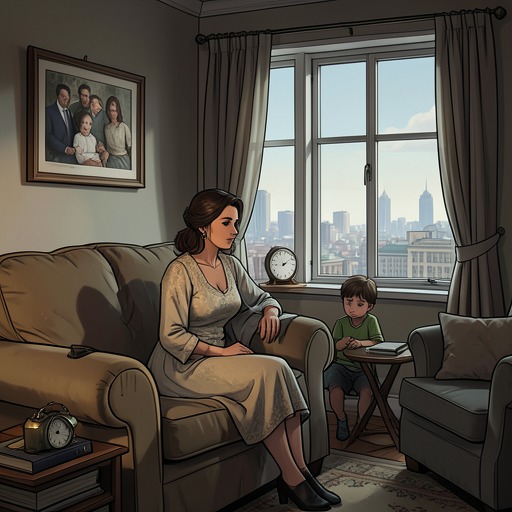
Solstice is sufficiently younger than Pandora that Pandora says she could almost be her aunt. Their mother, Magnolia, died when Pandora was thirteen; Solstice was even younger, and later Pandora describes her as having lost their mother at three. The siblings grew up amid the remains of a failed family, but did not experience that family in the same way. Solstice was too young to share much of Pandora and Edison’s earlier life together, and Edison left home when Solstice was four.
Pandora remembers Solstice as the family member who consistently tried to create the appearance—and practice—of a more connected household. She bought presents, sent cards, and visited Pandora in Iowa every other summer with a regularity that seemed almost disciplined. Those gestures made Solstice the most persistent initiator of family contact, even as the sisters remained emotionally distant. Pandora describes Solstice as well-adjusted on the surface but privately aggrieved, and admits that she did not feel close to her.
Efforts to Build Connections
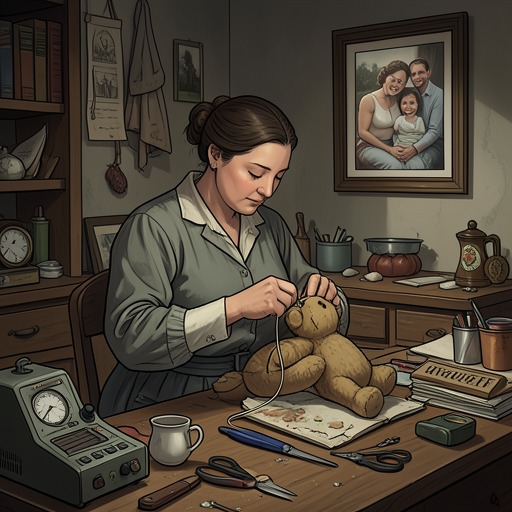
Solstice’s attempts at connection were practical as well as symbolic. When Pandora was reluctant to make a pull-string doll caricaturing Solstice’s new boyfriend, Solstice offered to pay. Pandora set a price she expected would discourage her, but Solstice immediately sent photographs and a list of his habitual phrases. The exchange illustrates Solstice’s determination: she pressed ahead even when her sister’s hesitation might have served as a refusal.
Her gifts also became a recurring source of strain. Pandora recalls care packages containing oddly chosen, conspicuously impractical objects, including a loosely knitted rooster, porcelain chopstick rests, a delicate fan, and a change purse with a hole. Pandora felt superstitious about discarding the objects, so they accumulated around the house. To her, the packages produced a sense of obligation and ingratitude; to Solstice, the ongoing practice appears as one of the few reliable ways to reach across the sisters’ distance.
Solstice also invited Edison to visit her in Los Angeles, writing invitations on Christmas cards. According to Pandora, he did not reply even to decline, and one card was returned because Solstice did not know his address. This silence sharpened the contrast between Solstice’s attempts to include him and the established, private connection between Edison and Pandora.
Conflict over Edison
When Edison was staying with Pandora, Solstice learned of his situation after Travis forwarded an incriminating photograph. She confronted Pandora about not telling her that Edison had been living there for two months. Solstice objected not only to the omission but to what she saw as a familiar pattern: Pandora and Edison formed a closed unit, sharing information and history while leaving her out. She recalled their locked-door phone calls and their later visits together in New York, and said she had practically grown up an only child.
Pandora defended Edison’s privacy and argued that Solstice’s childhood age and absence from those earlier experiences explained why she had not been included. She also believed that Edison was largely indifferent to Solstice and had spent years protecting her from that indifference. Solstice, however, insisted that his difficulties were serious and that he needed people to reach out; she wanted the chance to act as his sister rather than have Pandora mediate their relationship. Pandora answered that their relationship was not her responsibility and that Solstice could contact him herself. She doubted that Solstice would do so, believing that Solstice was afraid of Edison.
The confrontation also makes clear how each sister interprets the same family history. Solstice sees Pandora’s closeness with Edison as exclusion; Pandora regards it as the consequence of an attachment formed before Solstice could participate. Their dispute is not resolved by identifying a single responsible party: Solstice’s wish for a sibling relationship is real, but so is the long-standing distance and Edison’s own lack of response.
Work, Character, and Family Judgment
Edison’s contempt for a life organized around basic security further exposes the difference between his outlook and Solstice’s. He mocked her work as a publicist, reducing it to promoting other people’s accomplishments, and treated her concern with having food and a roof as evidence of an unambitious life. Pandora defended Solstice as a genuinely nice person, while Edison rejected the description as something he would not want said of him. The exchange shows that Solstice is judged by Edison through a standard of conspicuous ambition that leaves little room for ordinary stability.
Pandora’s account of Solstice is itself divided. She resents the gifts and the grievance she senses behind Solstice’s efforts, yet the narrative also shows that Solstice’s regular cards, visits, and invitations are forms of care. Her persistence is not enough to overcome the distance between the siblings, but neither can it be dismissed as mere self-presentation: when Edison finally makes long calls with Solstice, he accepts a relationship that had previously remained mostly an invitation.
Later Contact and Legacy
After Pandora employed Edison at Baby Monotonous, he no longer asked her for spending money and began living within his means. He also started working toward a management role. In this more settled period, Edison had a couple of long phone calls with Solstice. Pandora notes that the conversations involved some tedium, but says their effect was important: embraced by her brother, Solstice stopped seeing Pandora and Edison as a pair sealed off against her. The change is modest and does not erase the past, but it gives Solstice direct contact with Edison rather than making her dependent on Pandora as intermediary.
At Travis’s memorial two years after Edison’s extended stay in New Holland, the siblings met Solstice for dinner. She was visibly overwhelmed, and Pandora had to request extra napkins for her. The occasion altered Pandora’s understanding of Solstice’s isolation: Solstice had missed Travis’s years as a television star, had been shut out by siblings who grew closer through excluding her, and had lost her mother when she was very young. When Solstice would not hear criticism of their father, Pandora recognized how much of his presence had shaped what the older siblings talked about. Without Travis as their shared subject, Pandora and Edison found they had surprisingly little to say. Solstice’s grief therefore brings the family’s unequal memories into view: she had been trying to secure a place in a family whose central bonds were formed before she could share them.